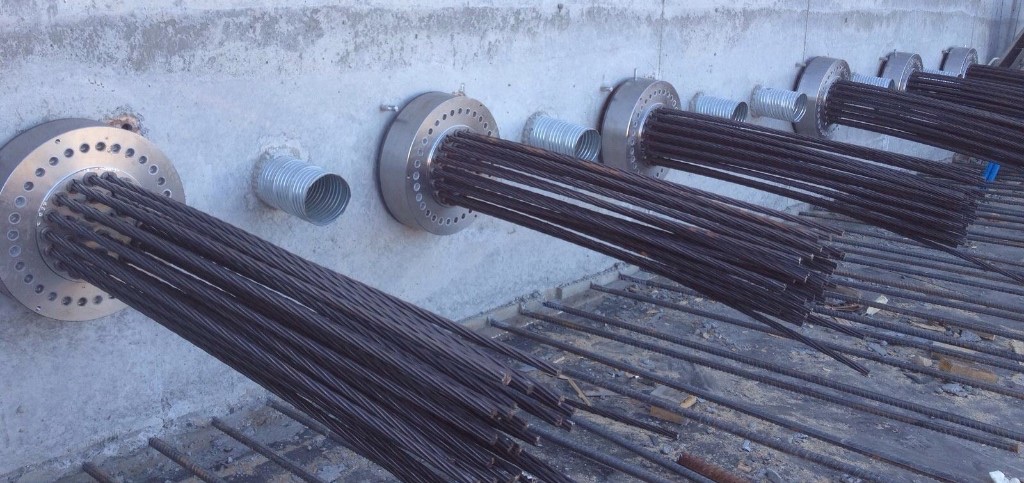
How Bonded Post-Tensioning Works
In bonded post-tensioning systems, prestressing strands are placed inside metal duct sheathing, concrete is cast, and after stressing the duct is filled with grout injection. This creates full structural bond between strand and surrounding concrete, distributing forces more uniformly along the member.
Bonded systems are preferred for bridge, viaduct and cylindrical structure projects. ASZ Grup provides end-to-end support with EN 523/524 round duct manufacturing, grouting equipment and field execution for bonded post-tensioning.
Bonded System Advantages
- High load capacity through full strand-concrete bond
- Long-term structural integrity and crack control
- Proven performance in bridge decks and cylindrical walls
- Individual strand replacement possible (design-dependent)
Products Used
- Round metal duct — EN 523/524 Class 2
- Prestressing strands — 1860 MPa, low relaxation
- Anchorage heads — active and passive
- Grout injection equipment
31MTG Coupler Anchorage Detail
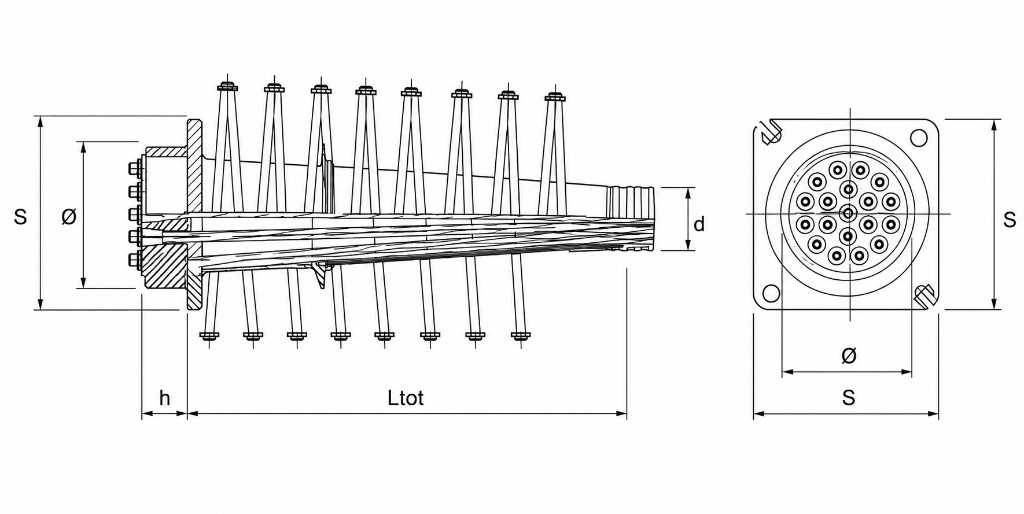
EN 523/524 Duct
5,000 m/day production capacity with EN 524 testing.
Grouting
Site grout injection and quality documentation.
Bridge Experience
References including high-speed rail and major infrastructure.
Reliability
ETA-compliant anchorage and controlled execution.
Frequently Asked Questions
What is the difference between bonded and unbonded post-tensioning?
In bonded systems, strands are bonded to concrete through grout injection. In unbonded systems, strands remain free inside HDPE or metal sheathing. Bonded systems are chosen where high structural integration is required.
When is grout injection applied?
Grout injection is typically performed the same day or the day after stressing and wedge locking are completed.
For technical details, catalogues or project-specific quotations, please reach us via our contact page.
Request a Quote