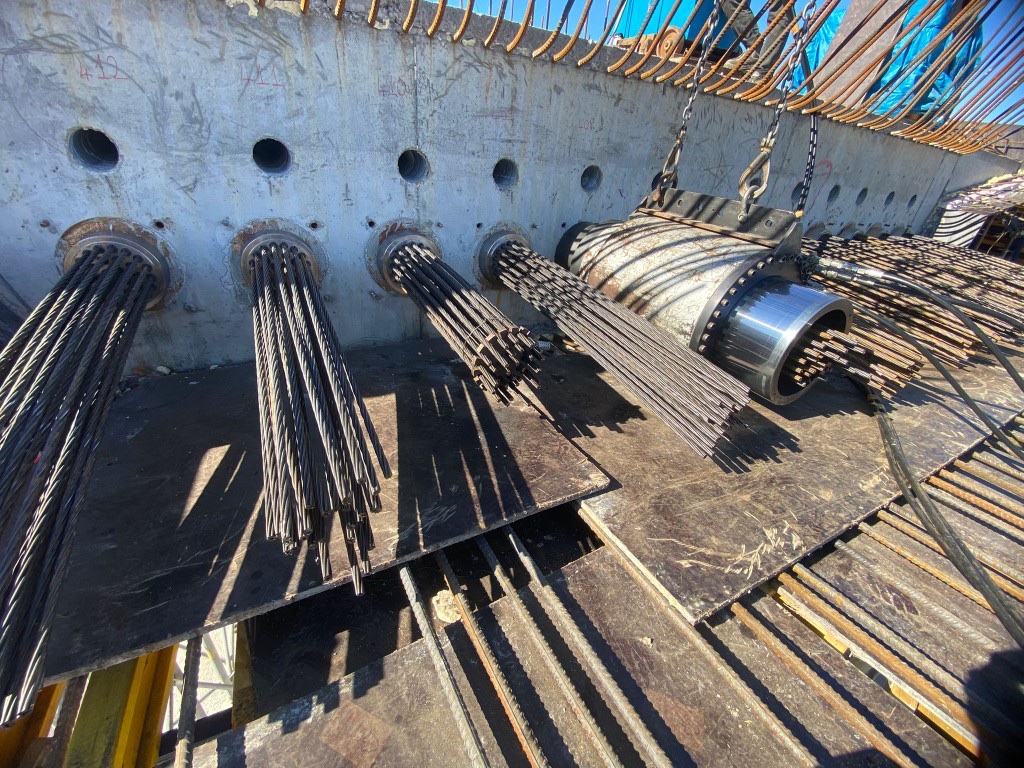
The Post-Tensioning Process
Post-tensioning is the process of stressing prestressing strands placed in a reinforced concrete element after the concrete reaches sufficient strength, using hydraulic jacks and locking the force into anchorage heads. This improves structural performance, controls cracking and reduces material consumption.
ASZ Grup has extensive field experience across all stages of post-tensioning projects: duct placement, stressing, grouting and quality control. For a general overview, visit our post-tensioning systems hub page.
Post-Tensioning Stages
- Duct / sheath placement — Metal duct or HDPE sheathing installation
- Strand threading — placing prestressing strands inside the duct
- Concrete placement — concrete class aligned with design prestress force
- Stressing — hydraulic jacking to target force, wedge locking
- Grouting — grout injection in bonded systems
Bonded and Unbonded Options
Bonded post-tensioning creates full bond between strand and concrete through grout injection; it is widely used in bridges and cylindrical structures. Unbonded post-tensioning allows free strand movement inside the sheath — an economical solution for building slabs.
Bridges & Viaducts
Bonded post-tensioning for long-span infrastructure projects.
Building Slabs
Thin slabs and wide spans with unbonded systems.
Cylindrical Structures
Circumferential post-tensioning for containment safety.
Quality Control
Stressing records, grouting reports and field testing.
Post-Tensioning Catalogue
Download our post-tensioning catalogue for anchorage, strand and accessory specifications.
Frequently Asked Questions
When is post-tensioning carried out?
Stressing is performed after concrete reaches the minimum strength specified in design, typically within 3–7 days depending on concrete class and ambient conditions.
How is post-tensioning cost estimated?
Cost depends on strand tonnage, anchorage quantity, duct length, application method and project location. Submit your project documents for a tailored quotation.
For technical details, catalogues or project-specific quotations, please reach us via our contact page.
Request a Quote